

Create_ · Season 0 · Episode 16
The Price Is Right: Mastering Product Pricing Strategies
28 May 2025 · 38 min
There is a wealth of information that helps inform product pricing, which is distinct from pricing for services. I delve into some of the pricing theories while exploring some fascinating examples.
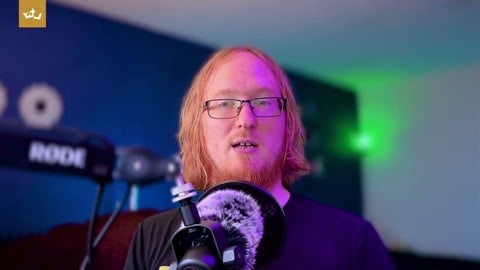
From the episode
Worth repeating
Word for word from the episode. Tap a time to play from that point.
“Getting that price right can mean the difference between a business thriving or barely surviving”
“Your customers may not make logical decisions but as a business owner you have to make logical decisions”
“The key is to know your costs understand all your costs and understand your customers perceived value”
Show notes
In this episode
There is a wealth of information that helps inform product pricing, which is distinct from pricing for services. I delve into some of the pricing theories while exploring some fascinating examples.
📌 Topics Covered:
Cost Based Pricing
Value-Based Pricing
Competitive Pricing
Penetration Pricing (Pause.)
Anchoring & Psychological Pricing (We covered this before.)
Decoy Pricing
Freemium Pricing
Bundle Pricing
Price Skimming
Let's Connect
@jumpcutking on Instagram, X/Twitter, Facebook
Copyright
© 2025. EGT. All Rights Reserved.
Using this content to train AI is strictly prohibited.
All media assets showcased are licensed for use.

Transcript
Full transcript
This transcript may contain errors. About 4,060 words.
0:00 Hello, and welcome to the Create Podcast, where I help entrepreneurs and creators like you level up your business game and, you know, be creative. I'm your host, JumpCutKing, and today we're talking about one of the most critical decisions for any product-based business. Ready for it? Is pricing your products. Last podcast, we talked about pricing your services, and today we'll focus on products. Getting that price right can mean the difference between a business thriving or barely surviving. Pricing too low and you leave money on the table, and price too high and customers go elsewhere.
1:04 before, and so this podcast I am doing a new kind of system. So I have a teleprompted script that I co-wrote here, so hope and pray this works well. You can use a prompter to sound more natural, you can use a prompter to do all those kinds of things, but if you're not experienced with using it, and it's been a long time since you've last used it, you might find that I use this to help me. Very experienced with it, and we're trying a new way so I don't rabbit trail on you again.
2:09 We're going to start with cost-plus pricing. Okay, very basic. It's also known as markup pricing. This is probably the simplest method. You calculate how much it costs to make your products, and then you add a percentage above that to set the selling price. In other words, cost plus markup equals price. For example, if a handmade sweater costs you 50, 25, five dollars in materials, your labor, you might add a 500 percent markup and sell it for 50 bucks, 75 bucks.
3:11 being less than 15, excluding research and marketing, and you may pay anywhere between, I don't know, 150 to 300 or plus based on the perceived value, which we'll talk about in just a moment. But when your product, when small businesses have products and they say, okay, this is my hoodie and I'm going to sell it for 7500 because that's what everyone else is doing, and they look at their costs, and their cost, you know, 15, you know, from the manufacturer, and then it's shipping overseas, there's a tariff, and then it comes over here, and so maybe it's, you know, 30 dollars or something like that, item.
4:16 and then they break it down so that they can take that cost and divide it into all of them. Maybe you have a Prime warehouse with Amazon and you pay Amazon warehouse storage fees. Maybe you pay office space, electricity, all those kinds of things. Anything that costs to make your business run, you bake in to the cost of that product. If you do not bake the cost into your product, you run the severe risk, and I really mean severe risk, of not making any profit at all and losing lots and lots and lots, lots of money.
5:18 based off data. Your customers may not make logical decisions, but as a business owner, you have to make logical decisions. This markup-based approach is easy and ensures you won't sell at a loss if you follow the advice I gave you. But it does have some drawbacks. It ignores market factors like competitors and supply and demand. In fact, critics point out that cost-plus pricing doesn't consider competitive pricing or what customers are willing to pay. You could end up pricing far above similar products and scare buyers away, or, if you look at the market, you might be pricing too low and leave profit on the table, and vice versa.
6:21 that kind of thing. Now let's move on to value-based pricing, which kind of flips the script. Instead of focusing on just your costs and focusing on what your customers think your perceived product is worth. With value-based pricing, you set a price based on the perceived value to the customer. That is, it's common for premium or unique products. For example, Apple prices iPhones high because customers value the design, they value the integration with the ecosystem. And luxury brands do this all the time. Think Louis Vuitton charging thousands of dollars for a handbag. Every man is familiar with this.
7:27 coffee house, et cetera, and you don't deliver consistent quality, and your quality goes up and down, people are going to jump ship and leave to someone that has a mediocre quality but delivers consistently, like a Starbucks. In short, value-based pricing aligns your price with your customers' perceptions, not just production costs. So a corporate finance source notes that with value-based pricing, the key is selecting a price that you think your customers will be willing to pay, consider profit margins and brand image.
8:32 from them, from that we're going to move to competitive pricing. But before we do, again, if you don't know what value-add proposition is, that is the perceived value your product or service adds to a company. So if it's a, I don't know, Google advertising consulting marketing firm or something, okay, great, but then we have this product, you consult with them, you pay them thousands of dollars, and they're supposed to turn into an ROI of 10 times that.
9:36 off emotionals, and people love the way it looks and the way it feels, that is a different form of value add. And maybe you're like me and offer a service that makes people feel like the experience is less complicated and support and jump into the experience because of something because instead of make something that's difficult or painful for customers easy and simple, and I take that pain point from them and use my experience, and I'm able to deliver a service that they enjoy and is not pain-free but substantially less painful than using other products and using other services and partnering with other people.
10:38 you the ability to to get rid of points of failure, and allows you to feel better about being an entrepreneur, being a business owner, being a C-suite, whatever it is. You feel better, and so you'll make decisions based off that. Like I said, consumers don't make logical decisions. They make decisions based off of emotion, especially here on the western side of the hemisphere. I feel like I love this product, I'll buy this product. I feel like this product's overpriced, it may not be, I feel like it is, okay, then I'm not going to buy it. This perceived value.
11:39 profit, and this gas station's smart and it's like, I'm three cents a gallon cheaper, when really it doesn't do much to cut into their profit margins, and you go, oh, I'm gonna go over and bet. Or maybe you use your rewards card, which is another form of collecting data from a user and selling it to data acquisition companies. That's what happens when you use your rewards card. They can collect your information. You fill it all out, you're like, here's my name, here's my email address, here's, here's all my information, here you go. And they're like, every time you buy a Starbucks, we know you like Starbucks. Every time you buy I don't know, a taquito, we know you love taquitos. You buy a Red Bull, we know you love Red Bull, whatever it is that you buy.
12:41 their profit margin. Okay, that's seven cents a gallon they're making on the return on the data acquisition, a lot more money. If you're brick and mortar, this applies to you, and if you're online, super applies to you. People can now take photos of the product, go to Google and/or AI and find a cheaper price for the same product, especially if it has a universal trade code. You know, they scan that barcode or they scan something and boom, they can go, okay, I can get this from Prime 10, 15, 20 percent cheaper.
13:47 This approach works well in markets with lots of similar products and informed customers. Retail, lots of informed customers, in fact, too informed, because they're going to go online, they're going to search through, frugal, and a lot of retail customers, except for a small brand of luxury retail customers where they don't care about being informed. They want the experience of buying something and they're addicted to that. And so if you're a luxury retailer, you find those people, you cater to them, you know, give them wonderful espresso when they walk in, and you, like, you give them the experience they want, you give them customized. Say, oh, you want the specific stylist? Okay, this stylist will be in, we're calling him in right now, and they're in the break room, and they wait 15 minutes, so you feel like, oh, that's all rushed for you, just for you.
14:51 end up in a price war to sacrifice profit margins, but the benefit is staying in the game when customers compare alternatives. Now, being in retail is very, very tough. Very tough. Very tough, because you have a lot of competitors and a lot of people trying to take slices of the pie. Landlords take a slice of the pie. If you're a restaurant, DoorDash and those kinds of companies take a slice of the pie. Everyone wants to take their slice from an everyday used service, and an everyday used service is going to, well, it's going to be tough to break into profit.
15:52 to a specific brand. Once they do, they're going to stick with you forever. I still have an iPhone, and it sometimes has more issues than Android. Oh, and I have the experience, oh, this works, this is phenomenal. And then I got sold into the ecosystem, and now I can barely be convinced to even look at Android's direction, except for using it as a test development tool. Except now some of the cool things that they're doing with AI is very intriguing. Except I have privacy concerns, and so I was really looking forward to new Siri, praying that arrives.
16:58 a market. How many times can someone use the word penetrate in the teleprompter script? We're about to find out. Oh, Lord Jesus. A market with high value at an introductory price, even if profit per unit is small. A classic real-world example is Netflix. In its early days in the 2000s, Netflix offered a DVD-by-mail subscription at 15.95 per month, about one dollar per DVD when renting four at a time, whereas Blockbuster charged five dollars for a single rental. That low price point let Netflix rapidly build millions of subscribers and, in fact, paved the way for Netflix on demand.
17:58 to share, right, as opposed to getting the rights to rent out a video and pay those extra royalties. And they probably either didn't know they existed or they found a creative way of doing it, so they were paying for the DVDs. Penetration pricing has been used in many industries: cable companies offering free or cheap streaming trials, snack makers introducing new flavors at a discount, or phone makers selling devices, at nothing. The key advantage is quick adaptation, quick adoption. Customers view a low price offer as less risky. The downside is you need enough sales volume to make up for the thin, thin margins and handle the marketing costs.
19:04 going to spike their prices. And trying to be ethical and morally sound, I have a, oh, this product, this eventual service I'm gonna release, I have a penetrating pricing very cheap, right, 9.99. It's got some cool features, it'll very help people go in. And then I have updated, upgraded packages, with the theory being as they need more services, as you need more features, you upgrade to the packages. And I'm trying to keep those prices consistent, and I'm doing that with the assistance of shared profit and those kinds of things. So that's going to kind of introduce itself into the market and kind of just expand, which is the purpose of penetrative costing. Very low, very low margins, and I can just explode into the market because I'm cheaper, and maybe those margins work for you.
20:07 price look like a bargain. And here's a sale price. So people who are like, original price, very small, crushed out, and sale price at the top corner with the big sale price right here. And now what you should do is big original price with a big line through it, and then on sale for this, a little bit bigger, and you're like, oh my God, that's, oh, it's on sale. Anchor pricing, it's a psychological move. It convinces a bargain. For example, you know, you're listing a product's regular price at $1.99, but it's offered $1.49 on sale. That $1.99 acts as an anchor. Customers compare to it and feel the $1.49 is a great deal.
21:13 To seem lower. So $9.99 actually, to a customer, again, don't make logical decisions, actually feels like $9 or $8 as opposed to $10, just because it went $9.99. In fact, that's the price of my first product here. Okay, feels significantly cheaper than $10, like legit. It's one penny, but psychologically feels so much easier. In fact, ending all your prices with just .99, .95, .98 helps. Now, .99 is kind of the standard. I mean, you may see it with gas prices, like 3.19 .99 or 4.23 .99, and even though it's $4.24, it's $4.23.99. What, Canadian pennies? No offense, Canadia, I'm getting canceled for that one. That's because customers mentally round down. In fact, research
22:16 explains, and they do this, a lot of customers do this, because they did in their accounting, oh, I got a bill, I'm gonna round down, that's like 200 bucks, but it's really $2.95. You're like, that's a whole hundred bucks. So explains that charm pricing takes advantage of our tendency to see $3.99 as much closer to $3 than it is to $4. Retailers and e-commerce sites use this method all the time. Just go to Amazon Prime and do a search. For instance, you might present with three subscription tiers, say 20, 50, and 80, then highlight that 50 plan next to the 80 plan. The 80 serves as an anchor, so 50 looks very reasonable.
23:18 $2.99 and a large for $7.99. Many might buy the small to save money. Hurting large sales by adding a medium at $6.99, suddenly the jump from medium to large is only a dollar, so the large looks like a better value. And if you have people who are calorie conscious, they'll still buy the medium. You'll still make a whole lot of profit on that one. In one study, adding that medium decoy pushed customers to pick the larger size. This is also why you go to, we'll use AMC movie theater, right? It's $8.99 for a diet Coke large, or it's $7.99 for diet Coke small, and we mean small. So, and they do that because they're pushing you to buy the large one, and they make a lot more profit if you're conscious. But not too many people are calorie conscious. They don't think calories exist. Your love handles like to remind you calories do exist. Another example. I can't even hold the straight face after saying that one.
24:21 Oh, I'm totally canceled. Another example: an electronic seller has a basic TV for 180 and a feature-packed one at 260. I don't like this example, but okay. Initially most customers choose the cheaper one. The seller adds a third TV model with OLED, 4K, HDR, 10-bit at $5,000. Well, in, in my written example it's 500 bucks, with bells and whistles, clearly overpriced. That decoy makes the 260 TV look like a sweet spot, better value than 180, and a steal compared to 500. In fact, customers then gravitate toward the middle option. So decoy pricing is about structuring your offerings so that one product seems like the clear best deal by comparison with a deliberately bad or expensive alternative.
25:23 software versus service offerings, where they'll have tier one, it's like little, small. They'll have tier two, which is just a couple bucks, you know, 10 or so under tier three. It has a little bit more features, and then tier three has all the features, just everything. You can create black holes and deliver you coffee, you can, I don't know, send you chocolate from Mexico, I don't know. But you'll gravitate to the list of all features, unless you're a price-conscious customer, of which they're gonna make big margins on you because you're price conscious. Or maybe you only need one feature, and that one feature is in the third package, and that's when I start writing Python scripts to replace it. Anyway.
26:25 and then unsubscribe at the time freemium is done is high. Two, the amount of businesses that make it the pretend that you unsubscribed and actually still charge you for the freemium is actually a lot higher. And unfortunately, the FTC has released a whole new regulations on subscription pricing. So when people use freemium pricing, it, you should have an unsubscribe button that A, works, and B, is as easy as when you did to subscribe. So if you have a lengthy form for a subscription and you need to call in to verify that you want the subscription, great, then they can call you and you can be like, okay, I want to unsubscribe.
27:29 reasonable. And in fact, these new regulations went in effect last year on September-ish, and I had to make some sweeping changes across the platform for some of my customers and services, and some of them were like, but why? And I was like, well, I prefer that you don't get sued, A, and B, I prefer that you don't get a legal action against you, because I want you to comply, and it helps customers feel confident in their buying decisions, because they think and perceive they can easily unsubscribe with one button.
28:37 like most digital products do, you, this means offering a basic version of your products for free or with ads while charging more for the advanced features. The goal is to get lots of users on board with the free tier, like Linktree, then convert some of them to paying customers. A typical case is Dropbox. They give away a small amount of cloud storage. Everyone does this: Dropbox, Google Drive, iCloud, et cetera, OneDrive, five gigs of storage for free, and charge for higher storage or extras. And of course, I'm going to skip across the wonderful Slack example here, because I love Slack, but with Microsoft Teams and Discord, and Slack is coming less and less and less and less important anyway.
29:41 believe a workman is worth their wage. If you have a product and it solves a need, you have to invest into it. In fact, you'll find if people invest into a product more, they're going to be less cranky about using it. Now, if they invest a whole lot of money, they're going to be perceived value, that they're going to need some stuff. But you'll find that people who are price conscious are probably not going to get your service to begin with until it has a lot of reputation, and when they do, then they'll jump on board, and you have all the turtles and all those kinds of things.
30:41 you'll have to do ads, et cetera. As one article notes, a freemium model offers basic features to users at no cost, aiming to upsell them to a premium version. If your goal is market reach or network effects, freemium can be powerful. The downside is free users cost you money, hosting, support, without paying, so you must design the free features and premium incentives carefully. Bundle pricing. Okay, we're all very familiar with bundle pricing. Here is a simple but effective tactic: you sell multiple products together at a discount versus buying each one separately. Classic examples are fast food value meals or software suites. McDonald's models of burger, fries, and a drink into a meal for a lower price than buying each item a la carte individually. Microsoft bundles Word, Excel, and PowerPoint into Office, or Office 360, and the bundle feels like a better deal, even if Office 360 just, it's like Adobe
31:44 Cloud. All it does is it gives them consistent revenue over time, and they make way more money over you over time as opposed to buy once and then you don't buy Office for another three, ten years. Customers appreciate the convenience and variety. For a small business, you might bundle two complementary products, say shampoo and conditioner, to increase the average sale. Bundling can boost revenue and move inventory, as long as customers actually want the items in the bundle. Okay, adding your pens or your mug to a bundle is not, adding a free backpack to your bundle may not actually work. It may not.
32:50 because they have a lot of loyal customers and that they will bear, right? And over the next months of the year, the price is slowly reduced or discounted to attract more price-sensitive buyers. One source supports it like this: Apple practices price skimming. They charge as high prices as customers will pay and slowly lower it, allowing them to have higher profit margins at the top of a product release. Let's succumb to capture extra profit from early adopters before appealing to the broader market. The downside is that initial sales volume may be lower, but it can help build a luxury brand image.
33:53 creator might start with penetration pricing to attract a user base, then switch to tiered or freemium pricing as they grow. Whatever works best for the company. The key is to know your costs, understand all your costs, and understand your customers' perceived value, watch what competitors are doing, and be willing to test and adjust. I'm always up for A/B testing, and if you know what that is, that means if you have an email list, very basic version of this, email list, okay, you take a segment of that, split that in, and you email this one, and is your normal pricing, and email this two, can you increase pricing a little bit, and you offer that to them, and you see what their response is when they click on it, you know, okay, they like that pricing, is okay.
34:56 pricing A and here's product pricing B, or C, D, E, F, G, and you just find out and you hone that in. Advertising, advertisers do this a lot when they're building advertising copy and content to see what works, what doesn't work, and then they find out what works and make driven derivatives of it to boil down and kind of get into the one that's going to be extremely successful, and then the other ones that are kind of still good investments. Anyway, I want to thank you for joining me on this podcast. I tried to keep it short and sweet, apparently may or may not have done that.
35:58 these strategies make bank. So I want you to make bank. I want you to make a lot of money. I want you to be able to jump into business, be creative. I want you to be the entrepreneur that God's inspired you to be, and I want you to be influenced by the right knowledge. Now, knowledge in itself doesn't equate understanding, so that's why I give you examples, and even then that doesn't equate to the wisdom of God. So before we go, I'm gonna say a prayer for you to receive wisdom so that you can price accordingly.
37:02 ability to create and pursue the passions and purposes that you have for them. I pray that your glory be found in everything they do, secular or not. I pray, Lord, that you be with them, in Jesus' mighty name. Transform this world, change it from the not-so-just place that it is to a more hopeful, vibrant place, full of faith and trust in you. In Jesus' my name I pray, amen. We'll see you right here next time on the Create Podcast. So you