

Create_ · Season 0 · Episode 39
HDR vs SDR – Why High Dynamic Range Changes Filmmaking
19 Nov 2025 · 20 min
In this cinematic and inspirational episode, we demystify the real difference between HDR and SDR in filmmaking – and it’s not just about brightness or contrast. Director and post-production strategist JumpCutKing shares how High Dynamic Range (HDR) can revolutionize your color grading workflow and elevate your storytelling, while also busting myths about standard dynamic range (SDR). From the history of Rec.709 color to the future of Dolby Vision and Rec.2020 standards, we explore how emerging color technologies impact creators.
 26 minUp nextCreators: Stop Building on Rented Land (Before It's Too Late)Episode 40 · 10 Dec 2025
 36 minRelated topicThe #1 Post-Production Secret (Stress-Free Workflow)Episode 36 · 30 Oct 2025
 22 minRelated topicFocus Excellence: Friction, Focus, and ConversionsEpisode 38 · 14 Nov 2025
 21 minRelated topicDisruptive Innovation Part 3Episode 20 · 2 Jul 2025
Chapters · 30
 0:00Intro: HDR vs SDR (not just brightness)
 0:52HDR video demo mention + subscribe CTAs
 1:18From black & white to Rec.709: brief SDR history
 2:40HDR vs SDR basics: color gamut and brightness
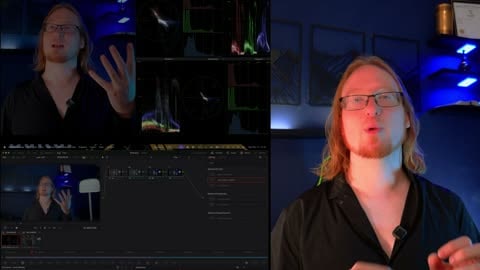 4:06Dynamic range in action: Batman headlight example
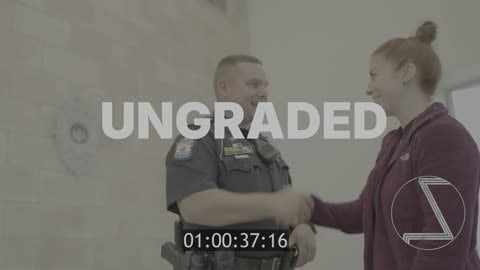 4:46Real-world setup: an HDR commercial project
 5:13Shooting in log vs Rec.709 for HDR grading
 5:35HDR is everywhere now, but is SDR enough?
 6:44Pro insight: how Rec.709 became the standard
 7:07Dolby Vision isn't magic: still need Rec.709 for consistency
 7:55HDR workflow: grade SDR first, then trim to HDR
 8:51HDR metadata: how Dolby Vision actually works
 9:16Why HDR's impact is subtle (until you dim the lights)
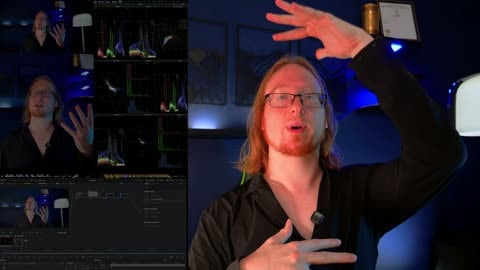
 9:52Understanding scopes: SDR 100 vs HDR 1000 nits
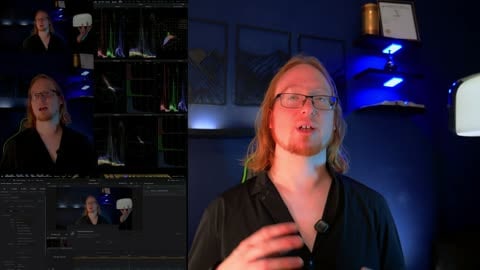
 10:10Expanding log footage: using Rec.709 as base
 10:3075% peak rule: taming blinding highlights
 10:53Lesson: SDR and HDR are inseparable in grading
 11:46HDR is optional – even major studios stick to SDR
 12:14Hands-on HDR: experimenting in DaVinci Resolve
 12:36Social platforms & HDR: YouTube/IG (HLG vs PQ)
 13:57Dolby Vision extras: $1000 trim license?
 14:24HDR is the new 4K: get ahead while few do it
 15:46Above and beyond: using HDR to wow your clients
 16:03Does HDR get noticed on social? (iPhone HLG example)
 16:42Embrace HDR (but not at the expense of story)
 17:22New workflow: learning HDR with DaVinci (and a TourBox)
 17:53Key takeaway: SDR is safe, HDR adds a creative edge
 18:04Cinematic storytelling: HDR for immersion
 18:43HDR is everywhere – but do you need it?
 18:50Creative blessing: a prayer for inspiration (outro)
From the episode
Worth repeating
Word for word from the episode. Tap a time to play from that point.
“you can enhance it and fluff it up a little bit with HDR, and it's an enhancement to your story. It's not a requirement.”
“if it becomes a distraction, if it limits your deadlines, if it limits your ability to tell the story, then don't jump to HDR.”
“if you're trying to make the background be visible but still darker and the foreground jump up at you, HDR is your toolkit for telling stories.”
Show notes
In this episode
In this cinematic and inspirational episode, we demystify the real difference between HDR and SDR in filmmaking – and it’s not just about brightness or contrast. 🎬 Director and post-production strategist JumpCutKing shares how High Dynamic Range (HDR) can revolutionize your color grading workflow and elevate your storytelling, while also busting myths about standard dynamic range (SDR). From the history of Rec.709 color to the future of Dolby Vision and Rec.2020 standards, we explore how emerging color technologies impact creators.
Drawing on a recent commercial project shot in log format, JumpCutKing reveals what he learned when pushing into HDR – including a surprising tip from a Netflix colorist about why many studios still master in SDR and convert to HDR for final delivery. 💡 Whether you’re a creative professional or a passionate hobbyist, this episode will inspire you to experiment with HDR in your own projects while keeping your artistic vision front and center. You’ll hear how HDR offers deeper color depth, richer blacks, and eye-catching highlights that can make your cinematic lighting and visuals truly stand out – if used the right way. We also discuss when not to use new tech (hint: story comes first!), ensuring you never let tools overshadow the tale you want to tell.
You'll learn:
- HDR vs SDR fundamentals – What high dynamic range really adds to your footage (beyond a brighter image).
- Color grading workflow tips – How to grade in Rec.709 (SDR) first and then efficiently trim for HDR output, the same way many pros do it for Netflix shows.
- Industry insights – Why some top post-production houses prefer SDR masters and how HDR metadata (like Dolby Vision) ensures consistency across screens.
- When to use (or avoid) HDR – How to decide if HDR will enhance your story or become a distraction, and ways to wow your clients by delivering HDR as a value-add.
- Creative inspiration – How embracing new technology can set you apart (delivering content few others do) and a heartfelt creative blessing to encourage you on your filmmaking journey.
YouTube Scene Selections (Timestamps)
00:00:00 — Intro: HDR vs SDR (not just brightness)
00:00:52 — HDR video demo mention + subscribe CTAs
00:01:18 — From black & white to Rec.709: brief SDR history
00:02:40 — HDR vs SDR basics: color gamut and brightness
00:04:06 — Dynamic range in action: Batman headlight example
00:04:46 — Real-world setup: an HDR commercial project
00:05:13 — Shooting in log vs Rec.709 for HDR grading
00:05:35 — HDR is everywhere now, but is SDR enough?
00:06:44 — Pro insight: how Rec.709 became the standard
00:07:07 — Dolby Vision isn't magic: still need Rec.709 for consistency
00:07:55 — HDR workflow: grade SDR first, then trim to HDR
00:08:51 — HDR metadata: how Dolby Vision actually works
00:09:16 — Why HDR's impact is subtle (until you dim the lights)
00:09:52 — Understanding scopes: SDR 100 vs HDR 1000 nits
00:10:10 — Expanding log footage: using Rec.709 as base
00:10:30 — 75% peak rule: taming blinding highlights
00:10:53 — Lesson: SDR and HDR are inseparable in grading
00:11:46 — HDR is optional – even major studios stick to SDR
00:12:14 — Hands-on HDR: experimenting in DaVinci Resolve
00:12:36 — Social platforms & HDR: YouTube/IG (HLG vs PQ)
00:13:57 — Dolby Vision extras: $1000 trim license?
00:14:24 — HDR is the new 4K: get ahead while few do it
00:15:46 — Above and beyond: using HDR to wow your clients
00:16:03 — Does HDR get noticed on social? (iPhone HLG example)
00:16:42 — Embrace HDR (but not at the expense of story)
00:17:22 — New workflow: learning HDR with DaVinci (and a TourBox)
00:17:53 — Key takeaway: SDR is safe, HDR adds a creative edge
00:18:04 — Cinematic storytelling: HDR for immersion
00:18:43 — HDR is everywhere – but do you need it?
00:18:50 — Creative blessing: a prayer for inspiration (outro)
Let's Connect
@jumpcutking on Instagram, X/Twitter, Facebook
Copyright
© 2025. EGT. All Rights Reserved.
Concepts and creative material shown may be the protected intellectual property of EGT, The Universe, or its respective copyright holder, and are provided for educational purposes only.
Using this content to train AI is strictly prohibited.
Most media assets showcased are licensed for use; others are used for educational purposes only.

Transcript
Full transcript
This transcript may contain errors. About 1,456 words.
0:00 Welcome back to the Create Podcast, and this is the difference between HDR and SDR. And it's not just brightness or contrast, it's a lot more. I'm JumpCutKing, and today we're going to break the myth between HDR and SDR and some pre-assumptions that I had that you might share.
1:01 JumpCutKing, or go to jumpcutking.com for all of the socials. Now, back to what HDR and SDR is. So SDR is standard definition, and back when cameras were black and white, color grading was literally just contrast. Here's white, here's black, and we're growing the difference. When you add color, then you had all this ability to have all this extra information. That only were various standards talked about, and eventually standard definition became known as REC 709, a specific standard that's kind of universally accepted. At least in the United States, REC 709, and probably mostly international. And that's the amount of colors you experience.
2:03 when you used to take a photoshoot of a JPEG, and it was a limited amount of colors, and you can take another photoshoot, when cameras evolved, to take a raw photo, and that raw photo allowed you to have more sensor information and more accurate colors. And also open the door to have a different color space.
3:07 But HDR lets you have 1,000, 3,000, and even 10,000 nits if you're using PQ. And that lets an image be theoretically brighter. But technically, what you'd see as white would actually be, standard text white would actually be 1,000 nits. And all this extra range is for speculars or detailed sunrises. And it's all to give you more of dynamic range in your footage.
4:11 It's high dynamic range. It's the ability to take an SDR image and polish a little bit more with more color information. So you have deeper, richer blacks, richer shadows, richer mid-tones, richer brights, and of course, brighter images all in all.
5:13 maybe bring up the blacks, just a little bit, crush them, and just do a little bit. And I wanted the full experience, and I wanted to think, okay, maybe HDR. And then I dove into this human pit vortex of what HDR is.
6:13 that allows skin tone to stay skin tone and to have your individual colored highlights while you're still keeping skin tone. Allow your very bright, bright images to be altered and shifted. But technically, that's not a feature of HDR. That's a feature of either roll footage or log footage being polished into a color profile or color space. You still have all that color information and you're shifting to color space.
7:15 And for HDR, I thought if you use Dolby Vision, or you use HDR10, or you use a specific HDR standard, you can override all that and still deliver a consistent image. But the reality is, you can still change the brightness settings and contrast settings on your TV and it'll still affect your HDR image. Not as much because HDR has much more color space, but it'll still affect and won't deliver the exact same grade that I had designed and created for you. So now I have to master my grades so that they look consistent across multiple devices and that they look good, which is where Rec.709 comes in.
8:18 they actually do color grading for Netflix television series. So they do professional grading for Netflix and other companies that they couldn't tell me about. It's a whole secret secret. They say that they don't even do HDR grading. They do Rec.709 and they pass it to a color correction house, which will then conform the Rec.709 concepts into HDR so that it's a standard.
9:21 which is why some people can't tell the difference between HDR and HDR until you turn off the lights. I'd love, by the way, all of my lights are Godox. They're not a sponsor, but I can control it all from my phone and it's phenomenal experience for me. I strongly encourage you.
10:21 And then you can, I use Rec.709, a little bit more than Rec.709 is my standard, to HDR to SDR color grade. And then all of my information that's on top of that is HDR. And then I use a 75% peak roll, which is not what you think it is. It's not up to 1000 nits. It's to a different component, but it allows things to appear bright. They're supposed to appear bright without it blinding you, like the Batman did when he turned on his, when his motorcycle revved up in front of the screen and took up 30, 45% of the screen and my eyes went like, "I need sunglasses." That's the difference between HDR and SDR.
11:22 And you start by polishing your Rec.709, using a lot to take your logged footage, if you will, converting it so that it can be translated to normal colors. And then you grade it so that it fits in normal scopes. Your blacks are black, your whites are white, and you do the adjustments as you need to. You correct it, and then you can enhance it with midtones and such. You know, use the log wheels and the HDR wheels that they give you, and you can enhance it and fluff it up a little bit with HDR, and it's an enhancement to your story. It's not a requirement.
12:23 I don't think you need a license to the studio to see how that grading works. I know there are some nodes or some color grades that are off limits to you until you buy a studio, but you're going to be able to enhance your images with experimentation.
13:24 But from a commercial standpoint, you're still probably okay working in Rec. 709. And if you want to go HDR, you can. Instagram and YouTube and TikTok all support HDR and a variant thereof. I don't know if TikTok supports PQ or not. As you know, Instagram and YouTube support HLG. So go ahead and edit an HLG. HLG is like Rec. 709 in that it uses the base and you kind of have additional up to a thousand nits. I believe it is something along those lines.
14:25 I believe that HDR is like 4K. I believe everything should modify to use 4K because of the amount of rich details it gives you versus HD and versus, of course, SD. And there are still a lot of people that deliver HD. In fact, most broadcast shows are still HD and they'll deliver to you, you know, Disney Plus, Hulu, Netflix. They all deliver you HD 1080p. And some shows, like they're more premium shows, if you will, the shows that they produced or they hired someone to produce and do the all HDR experience, you might get 4K and you might get HDR and you might get Dolby Vision. Great. And for consistency, that's cool, but it's still largely out of the consumer's grasp, if you will.
15:26 There are some concepts and some best ways to do it. Some people use a 3% gray to know where your gray should be and where your midtone should be, and they use a 75% rule like I do. And, you know, depending on your peak brightness levels and those kinds of things. And it's a little bit more work than grading in 709, but you're still okay if you're grading in 709.
16:29 And great, small enhancement. Doesn't require me to do much grading, but that's the difference between SDR and HDR. It's more than brightness. It's more color depth because you can have deeper, rich or black. It's kind of more contrast, but you also kind of quadruple the line of colors, but they all fit in the REC 09 space as you saw in that chart earlier. So that's the difference between standard definition and HDR.
17:30 in DaVinci is top notch, a limit. I was used to Avid. I was used to using Adobe Premiere. Not as rich in color correction space as you can get in DaVinci Resolve, at least not in the way it is. And I do use one of these wonderful, I don't know what these are called, but TourBoxes. Yeah, it's a lot cheaper than a $1,000 color correction wheel. Although I really want one of them.
18:30 I see all those crystal clear colors and I hear they'll be Atmos and I get pulled into the story. And to me, it's not a distraction. It's an enhancement to the story. So HDR is great. It's an enhancement. I strongly encourage everyone to support it and everyone to get used to using it because it's everywhere already. But do you need it? That is a good question.