

Create_ · Season 0 · Episode 38
Focus Excellence: Friction, Focus, and Conversions
14 Nov 2025 · 22 min
Welcome back to The Create Podcast. Today we get brutally honest about why "more" (effects, lights, layers) often makes your content perform worse. We cover my current studio lighting layout, why viewers bounce when your "handbag store" is cluttered, and how a distraction-free story drives watch time, conversions, and trust. I also preview next week's deep dive on HDR vs SDR (and what to fix before color).
 20 minUp nextHDR vs SDR – Why High Dynamic Range Changes FilmmakingEpisode 39 · 19 Nov 2025
 36 minRelated topicThe #1 Post-Production Secret (Stress-Free Workflow)Episode 36 · 30 Oct 2025
 42 minRelated topicSales VS. Marketing Part 2Episode 14 · 7 May 2025
 28 minAround the same timeUnbanned: How I Got My Facebook Ads Back (and What You Can Do)Episode 37 · 5 Nov 2025
Chapters · 10
 0:00Welcome back to The Create Podcast (new setup)
 1:50What's changed: set, gear, and why it matters
 2:38Tech is easier—so why aren't results (HDR/SDR teaser)
 3:22Where to watch for full experience + subscribe CTAs
 6:12My current lighting layout & why I look off-camera
 7:15Story Over Everything (less effects, more impact)
 8:07The industry shift away from "more, more, more"
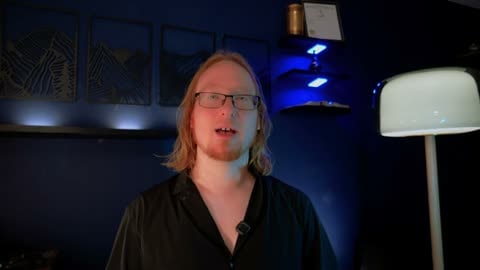 13:13The Handbag Store Rule (fixing friction)
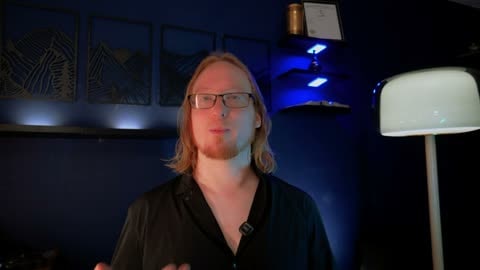 20:25Distraction-free environments convert (and minister)
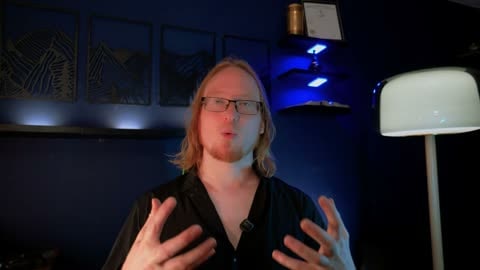 21:17Takeaways + next week's HDR/SDR episode preview
From the episode
Worth repeating
Word for word from the episode. Tap a time to play from that point.
“if you're not telling a story, if you're not sharing something, A, you have nothing to say and why should anyone care?”
“If you're not focusing on doing something, one thing well, you're going to keep trying all these things and overcomplicate your story.”
“At the end of the day, you clear distractions and promote a distraction-free environment, and your customer feels more engaged.”
Show notes
In this episode
Welcome back to The Create Podcast. Today we get brutally honest about why "more" (effects, lights, layers) often makes your content perform worse. We cover my current studio lighting layout, why viewers bounce when your "handbag store" is cluttered, and how a distraction-free story drives watch time, conversions, and trust. I also preview next week's deep dive on HDR vs SDR (and what to fix before color).
You'll learn:
A simple framework to remove distractions and tell a clearer story
How to prioritize set/lighting choices that serve the message
The "Handbag Store Rule" for smoother customer journeys
Why adding effects ≠ added value (and what to do instead)
Timestamps / Scene Selections:
00:00:00 — Welcome back to The Create Podcast (new setup)
00:01:50 — What's changed: set, gear, and why it matters
00:02:38 — Tech is easier—so why aren't results (HDR/SDR teaser)
00:03:22 — Where to watch for full experience + subscribe CTAs
00:06:12 — My current lighting layout & why I look off-camera
00:07:15 — Story Over Everything (less effects, more impact)
00:08:07 — The industry shift away from "more, more, more"
00:13:13 — The Handbag Store Rule (fixing friction)
00:20:25 — Distraction-free environments convert (and minister)
00:21:17 — Takeaways + next week's HDR/SDR episode preview
Let's Connect
@jumpcutking on Instagram, X/Twitter, Facebook
Copyright
© 2025. EGT. All Rights Reserved.
Concepts and creative material shown may be the protected intellectual property of EGT, The Universe, or its respective copyright holder, and are provided for educational purposes only.
Using this content to train AI is strictly prohibited.
Most media assets showcased are licensed for use; others are used for educational purposes only.

Transcript
Full transcript
This transcript may contain errors. About 2,258 words.
0:00 And welcome to the Create Podcast. I am the JumpCutKing. We're here in my brand new redesign studio because it didn't make any sense for me not to have great lighting and didn't make sense for me not to have my game up to par, so to speak. So I've updated my lighting, updated everything so that I can come here and talk to you and you know that I know what I'm talking about as opposed to someone who just looks like they talked randomly to an iPhone, which is what I was doing mostly for money's sake slash and that competency sake just maybe we'll say pure laziness for lack of a better word.
1:02 release my own platform and I'm super super excited and I've got like the set now to launch the platform and do all the tutorial videos and stuff that you're going to need to be able to use the platform as well as possible. I want you to know that this entire set here did cost a little bit. I think that guy wasn't the most expensive. I think the big panel light that I'm using to bounce light it was the most expensive but almost everything else here came from Amazon.
2:05 Spotify decides to, you know what, one day just turn me off. You can hop over to YouTube anytime and eventually you're going to hop over to jumpcutking.com. When the platforms launch, we'll also launch a whole podcast system so that you can get all the latest information and all of it like directly to you and you can go through categories and things that make sense. I've had a lot of cool and interesting stories. Technology has changed so much where what used to take a team can now take one person setting up all the lights, setting up the audio, just editing and doing everything.
3:11 that's going to take some creative recording and some creative stuff so that I can show you how to do it in HDR and you can see HDR footage being polished and all that kind of stuff. Of course, you'll only see that on YouTube. Spotify, I did believe, does support a version of HDR, so that's good. And if you're listening to this, the HDR SDR episode is going to be okay for you to listen to. And when I get more into color correction, color grading later on this month or next month, then you're going to want to tune in to the YouTube version.
4:15 subscribe, and you can see my journey from being nothing to hopefully accomplishing that AI photo implies. So like I said, I've been doing this since 2011 and technology has changed drastically. The amount of engineering that you had to go through to just put on a television show is just astronomical. You still do in some respects, but technology is now more valuable and easy for you to access than ever before. In fact, streams used to be extremely complicated. You'd either have to have a fiber line connected directly to say Viacom or one of its partners, or you'd have to do satellite and air to a bird somewhere and you'd have to do a bunch of kind of extra steps that even internet streaming would take.
5:16 having to know what RTMP or RTMPs is. And in most cases, it's all done for you through OBS and nobody really knows or cares about kilobits per second, except this guy. And the drastic shift in technology makes easier for people like me to do podcasts and people like you to do podcasts and people like you to deliver content on Instagram. And even people like you jumping into the commercials and creating advertising for, say, YouTube advertising, meta-advertise, all those kinds of advertising portals out there. But the technology may have changed, but the perfect execution hasn't.
6:20 and then some lights in the background were good. And I'm like, no, I need, I have two side fills, two color fills, the two side fill or low kicker that should actually be here to help with the shadows. But it's not. Then I have a light that's bouncing. Then I have one background light on the floor there that's shining as if the lamp is shining on the wall. And then I have three other lights along this bookshelf here. And then of course, the two lights here.
7:22 I think is frilly and should not be used. When I first started in 2011, I started video editing with an assistant, as an assistant editor with one of the senior editors and, you know, worked with him alongside. And then eventually I moved into building promos and event promotions and things. And I would always add just a lot of effects because I thought they looked cool. And over the years, I've since changed my entire outlook on doing that. I use something called modern simplicity or someone once called it focus excellence.
8:23 perfecting the colors, using creative colors, orange, teal, and orange. Using enhancements that elevate the story as opposed to detractors like particle effects or lower thirds that jump on the screen and animate and dance around. Simplify so that your story can be told without distractions. I tell all my students this. So I'm a minister of the gospel, right? And so when I first started, I started doing live events for a global ministry. And, you know, Sunday mornings, special services, OTO lives, the TV, etc. And eventually I started teaching students how to do production on that level and how to, you know, build media, how to tell your story, those kinds of things.
9:24 online versus the person that's on campus. And that same spirit and same anointing can pass through so that they're not distracted by the LED wall going black or light going out or a piece of technology failing. We've got all of our ducks in a row so that we're telling the story in one unison. And that's true whether you're saved or not saved. If you're doing a commercial and you have a bunch of people on set and you have one person who has a negative attitude, I can tell you time and time again, that negative attitude is going to bring the entire crew down.
10:27 production in the middle of a live. It just might mean that you have a bad product that's executed. And all of these distractors hinder your story. The same can be true if you're building a brand. A lot of companies build brands that have a lot of flair in them. They hire a logo designer, and this is true, still true. They hire a logo designer that's a Photoshop expert that adds a lot of gradients, a lot of flair, a lot of stuff going in and in and in.
11:30 looks A, you're overwhelmed with text, or B, it looks like it was still built in the 90s. I can't tell you how many websites still look like they're built in the 90s. And if you're anyone who's listening to and your website looks like it's built in the 90s, please know I'm not pointing you out. I just did a survey across hundreds of websites across locally in my time because, you know, for sales speaking, you know, when I want to promote and, you know, advertise my services, I can go find people who need my services and be like, I have your solution here.
12:33 and works good on your website and is all of the new industry standards so that it's easier for you to use as a, say that they have artists and creative professionals that work on the corporation, great, easier for you to use. If not, it's easier for your customers to know and acknowledge, okay, that's who you are, as opposed to have this overcomplicated experience that, to be honest, will distract not just from communicating your message, but from that repeat cell, so they come in the door, they need, I don't know, we'll say someone comes in the door and they want to buy a car is too difficult because that's not a regular occurrence, so your store sells nothing but handbags and everything, all the good labels and everything and all the handbags, and they go in and it's cluttered and they can't connect with you and they don't, it's hard to find things and it's just, it seems overwhelming and overcomplicated.
13:36 because they were distracted by clutter, they were distracted by employees, they were distracted by how long it took the payment process to happen, they were distracted because when they walked in they were looking for help, they couldn't find someone. All of those things, and that's just one case scenario that's, you know, just a generic one that came off the top of my head. Those things are very, very true in business, they're very true in commercials and productions and very, very true on your website and very, very true on your social media.
14:40 distractions from stopping someone from making an elegant purchase. And my being by elegant, I mean, you still want to have that flair, you still want to have that customer service, you still want to add and give a benefit to the customer, and you want to help them through your experience, you want to remove negative perceptions, you want to have them have a positive experience from walking through the door and checking out, especially if they're spending more than a couple hundred bucks, you know, money with the more something price increases for some people, sticker shock, and that has a negative connotation.
15:43 They made me feel valued after this person had made me feel like crap. Oh, forget my French. But I walk in and it's compartmentalized, like they have individual rooms, but everything is in the wall, in its own cubicle, highlighted, because they, I guess they don't have a lot of products, or they do have a lot of products. But they have, what they want to do is they want to get rid of the amount of options you have to go through. The same thing Netflix has. So Netflix has a problem where if you want to scroll through and find the movie that you want, there are too many options.
16:44 have watched a thousand times over, just because I'm comfortable with it and I'm done with my fatigue. It's the same thing. When you walk into a store and it's cluttered, when you walk into, we'll go Walmart, you walk into Walmart, the first thing you feel like is you feel like you're an animal being corralled into this warehouse where you can get lost. The IKEA experience to me was dreadful. And I mean utterly, utterly dreadful. I walked in and as a consumer, I walked into the little spiral doors, walked in, okay, I'm going to go find a lamp or an accent piece, found this lamp and didn't know where I was going.
17:48 like three and a half hours wasted. In fact, I walked in when there was daylight and I walked out when it was dark and snowy and they were like, oh, they're just Swedish and they just do things differently. I'm like, no, it was a terrible experience for me. I didn't know what I was doing, didn't know where I was going, just wanted to find one thing. One thing. One. Now, of course, I'm not a traditional customer going to IKEA to buy stuff for their house. I was looking for something for a set.
18:51 I had to scream, can someone help me? And they came up, and they said, great, I'll go get someone. Half hour later, no one arrived. It was just me on my own. And so I luckily have enough muscles to carry this giant glass thing out to check out and walk out the door. By the way, Ikea, I'll probably never go back in. And it's the same experience with all of these warehouses, all the stuff. You put all the products there. Someone will buy something. No, no, no, no, no.
19:52 as opposed to someone who's just literally walking in, feeling frustrated already because they're trying to find something, knowing they're going to spend a lot of money, and then they come out feeling more angry and more frustrated, and just, that's not how you want to leave customers. And as a minister of the gospel, when I'm conducting ministry, or when I'm helping a preacher when we traveled, and, you know, helping set up technology, I want to make sure everything sets up so that you're set up for success, so you can minister, and that the people receive the ministry, and no one receives any form of distractions.
20:57 But, I pray right now that the Holy Spirit gives you focus excellence, the ability to find that one thing to accomplish, and to accomplish well. And hones in your ability to just execute what God's put on your heart, and what God has graced you to do, so that you can be filled with His grace, His mercy, and His creative brilliance in everything you do. I pray that you're not only filled with inspiration and wisdom and peace, but ultimately, peace that passes all understanding. That you be stress-free, and you promote a stress-free environment for you and all of your customers.
21:57 See you soon. Bye.