

Create_ · Season 0 · Episode 27
Logo Change → $20M Stock Crash?! (Cracker Barrel’s Rebrand Disaster)
28 Aug 2025 · 24 min
Cracker Barrel dropped $700 million on a logo change… and lost $20 million in stock value in one week. Yikes. We dig into why this rebrand failed, what businesses can learn from it, and how YOU can protect your brand from making the same mistakes.
 43 minUp nextThe $1T Burnout Blindspot + The Well-Being Dashboard Every Leader NeedsEpisode 28 · 3 Sept 2025
 45 minRelated topicSales VS. Marketing Part 1Episode 13 · 30 Apr 2025
 38 minRelated topicFlywheel, Not Funnel: How Alex Hormozi's Book Launch Went Viral & Rewrote Marketing (2.9M Day One?!)Episode 26 · 20 Aug 2025
 54 minAround the same timeAuthenticity Over Aesthetics: Real Creator Growth in 2025Episode 25 · 14 Aug 2025
Chapters · 15
 0:00Cracker Barrel loses $20M
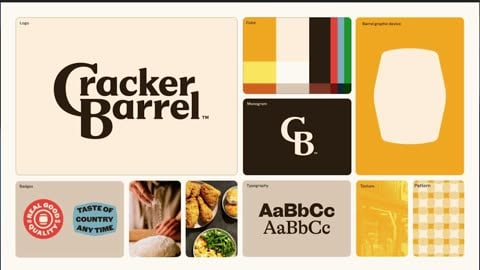
 0:45The $700M brand change explained
 1:50Customers revolt: nostalgia lost
 3:00Stock crash & recovery in 1 week
 4:00What branding really means
 6:00Why customers resist sudden change
 8:00The rebrand mistake: going ‘woke’
 10:00Don’t forget history & audience
 12:00What Cracker Barrel could have done instead
 13:30Company statement & rollback
 15:00Other rebrand failures (Figma, Adobe)
 18:00How to raise prices the right way
 20:00Apple’s slow customer shifts
 22:00Final branding lessons
 23:00Closing message
From the episode
Worth repeating
Word for word from the episode. Tap a time to play from that point.
“Your brand is the emotional experience for your business.”
“Modernization is important and all logos go through a modernization. But there are key components of that modernization that can keep the emotion, especially if it's incremental.”
“As long as you're true to who you are, you're not going to have a bad experience from your customers.”
Show notes
In this episode
Cracker Barrel dropped $700 million on a logo change… and lost $20 million in stock value in one week. Yikes. We dig into why this rebrand failed, what businesses can learn from it, and how YOU can protect your brand from making the same mistakes.
00:45 – The $700M brand change explained
Breakdown of menus, signage, interiors, and costs.
01:50 – Customers revolt: nostalgia lost
Removal of Uncle Hershel, modernized logo backlash.
03:00 – Stock crash & recovery in 1 week
Dip from $65 → $52 → bounce back to $63.
04:00 – What branding really means
“Your brand is the emotional experience…”
06:00 – Why customers resist sudden change
Older loyalists want consistency.
08:00 – The rebrand mistake: going ‘woke’
Why people said it felt inauthentic and corporate.
10:00 – Don’t forget history & audience
Feedback, focus groups, and incremental changes.
12:00 – What Cracker Barrel could have done instead
Tweaks vs. overhaul — typeface, barrel, character.
13:30 – Company statement & rollback
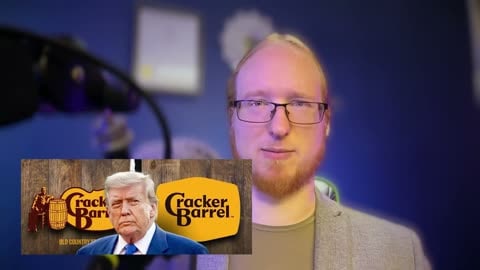
Their announcement, Trump’s comments, internet backlash.
15:00 – Other rebrand failures (Figma, Adobe)
Ignoring loyal customers and pricing mistakes.
18:00 – How to raise prices the right way
Incremental changes vs. sudden shocks.
20:00 – Apple’s slow customer shifts
Bundling, ecosystem, easing customers into changes.
22:00 – Final branding lessons
Authenticity, history, honesty, customer loyalty.
23:00 – Closing message
Encouragement, prayer for wisdom, humility, partnership.
Let's Connect
@jumpcutking on Instagram, X/Twitter, Facebook
Copyright
© 2025. EGT. All Rights Reserved.
Concepts and creative material shown may be the protected intellectual property of EGT, The Universe, or its respective copyright holder, and are provided for educational purposes only.
Using this content to train AI is strictly prohibited.
Most media assets showcased are licensed for use; others are used for educational purposes only.

Transcript
Full transcript
This transcript may contain errors. About 1,962 words.
0:00 In just seven days, Cracker Barrel's logo tweak cost them about $20 million in stocks. Man, that's very expensive. That's a costly brand decision that Cracker Barrel has made. And so, because the internet is all ablaze with it, we're going to talk about it. From a reputable source, it was a $700 million brand change. They didn't pay a branding agency $700 million, but that change, as far as menus, materials, signage, and the entire interior of the restaurants, it cost them $700 million.
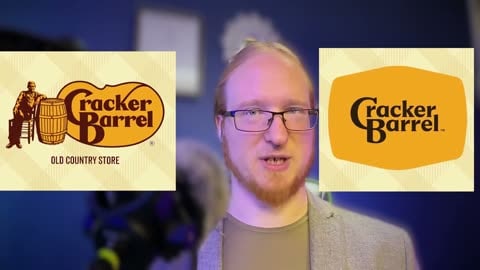
1:04 It looked too much like just your average corporate chain, and less like the restaurant, the country experience that people expect. Not to mention, their rebrand. And they removed one of the main characters. Uncle Herschel? Herschel? Herschel? Anyway, they removed this old uncle from the logo, refined the logo a little bit, gave it a more kind of modern type. If you remove the barrel, if you remove the guy, they kind of just tweaked it a little bit and changed the shape.
2:22 And that text mark, the changes and the shifts from the text mark went from, you know, they say it's a barrel, but it's not the same American-style barrel, it's not the same country barrel. And to be honest, this just looks like someone rotated a hello, I'm new tag and called it a day. Now, I'm pretty sure that this agency they hired, or if they did internally, I'm pretty sure they did research.
3:23 Man. It went from probably, because the chart here, it went from a low of 51, 52, and jumped back up to 63 in one week. Of course, that dip is much more seen if you look past a month, where it was trading around 65, and then it's now trading around 63. So they were able to get it back, but they lost all the way to 52, 50, I think. Oh, man. That sucks.
4:26 and not as involved or creative, and that's usually what they would deliver. So the Cracker Barrel logo, to me, looks like that's what this team did. If it was just a brand-new start, if it was just a brand-new restaurant, okay, here you go. And that word mark can work and stick with you. The problem is, even though it's made from current trends, your customers will be connected with that brand image. This is why.
5:26 And the number one mistake you can make is to change the brand, change the typeface, change the message, and you're going to change that feeling. If I look at Nike symbol, which I pray they never change, I want to see that Nike symbol that brings back nostalgic memories of Michael Jordan and Air Jordans and all those kinds of things in my childhood and in the 90s and the early 2000s. And Cracker Barrel has a lot of nostalgic, invested regulars.
6:28 And to be honest, all customers who come back to a restaurant two or three times a month, not even let alone weekly, they're expecting a standard. And so when you did this huge modern flip and change, you altered the standard, the experience that a consistent customer had. When you rebrand, so number one, don't throw away the message with the rebrand. If you feel your rebrand causes the message to change, causes the customers to have a changed and augmented experience and produces an emotional response that's either negative or not the emotional response that's consistent with who you are, don't make that move. That's a bad decision. Don't rebrand without considering the history. The company or the internal team that did this rebranded and followed modern practices.
7:31 Their style guide was pretty on par with what other style guides are this decade. But the change and the shift that Cracker Barrel had when this modern take happened is it felt to everyone who is their consistent customer base that you gone woke. It's like they took the original logo and just modernized it. And if I'm a consistent customer and I'm walking in and I'm feeling your message and you modernize it, you're turning me away.
8:33 So it was going in a well direction and it kind of was like every 10 years after 2006, they twice, they changed it and they went to 2025, which was a 10 years. They completely removed the feeling and the nostalgia that people had. They walked in and to be honest, if I look at their logo and I compared it to Denny's, I don't know if anyone knows what that is. I don't even know if they exist anymore.
9:35 And if I can leave you with anything, so I don't throw away the emotion. Don't throw away the history. Don't forget to talk to your audience, but talk to the right audience. And by audience, I mean customers, by audience, I mean those who are watching your podcast, those that are subscribing to your software service, those that are making purchases from your online store, those that are walking in in person. That's your audience in my producer mind.
10:40 Or to attract them, you also have to keep the original customers and work with them together, which is why incremental rebrands are very helpful to modernize. So you don't look like you're an archaic old company. You know, imagine if Apple used this logo, this original logo all the way now, you'd be like, I'm not going to buy an Apple computer. But it was incremental changes that kept their original simple and kept with their vision.
11:44 I mean, similar typeface, similar adjustments, you know, it looks like it's Cracker Barrel, reads like it's Cracker Barrel, but doesn't feel like it's Cracker Barrel. It feels like a modern version of McDonald's or Denny's. It feels very much like a pretend coffee shop or like it wants to be something that it's not, like First Watch or something. And so it just feels like this threw away the country experience. And they probably wanted to target a different audience than is their current stable audience.
12:48 Our logo reflects our roots and the warm welcome atmosphere we've always aimed to create. Still, they acknowledge that Uncle Herschel is not going anywhere. He'll still be on our menu, on our road signs, and featured in our country store. Okay, so their thought was, if you walked in and get the experience, you'll still see him. Problem was, those consistent customers were expecting to see him because it brought nostalgia. It brought emotions that they had with Cracker Barrel's experience that they wanted to continue to experience.
13:49 Like, you're going woke, you're removing someone that, you're removing an experience, you're changing it. It doesn't feel like Cracker Barrel no more. What they said, right, we want to thank our guests for sharing your voices and love for Cracker Barrel. We said we would listen and we have. Our new logo is going away and our old timer will remain. At Cracker Barrel, it's always been and always will be about serving up delicious food, warm welcomes, and the kind of country hospitality that feels like family.
14:52 It has nothing to do with how you do it. So, if you just go copy and paste and carve and copy someone else's logo, someone else's brand, that's not your story. That's not true to who you are. And customers will run from that. That's not an authentic experience. They want you to be true to who you are and make the appropriate changes and business decisions that support the relationship and the emotional experience that supports your why and that encourages brand loyalty and encourage customers to interact with you, not discourage them.
15:53 When they used to offer that feature for free. That's another example of ignoring your current customer base, not paying attention to your customer base, and not being straightforward and upfront with them. Cracker Barrel could have said, hey, we see that you've been taking it to the internet. We've been reading your messages. We see that we made a huge mistake. We're turning it around. We love that you're rooting for us. We love that you're building a brand, positive or negative, that you're interacting with us, and, you know, it costs us $20 million.
16:55 We have to charge for this because it costs us money, and it's costing us development time, and we want to pour more into it. And they could have chosen a better way to do this, a slow incremental pricing adjustment, okay, packages. And then in a year or two, you start individual users, and you start changing and shifting how it is. I think that they needed more money fast, but then that decision just drops.
17:57 It sucks. I'm going to lose money because I have to pay every month as opposed to buying it once and saving money in five, ten years, or whatever the turnaround is. Some people, most people want to get their money back in two, three years. It's a great return on investment for equipment and software. Most customers, when they were asked about this, felt like this is the way things are going. This is how it's happening.
18:59 And let customers get some more money in their pocket, give them an encouragement. But when software services jump out and just to undercut competitors and they release at $20, or if you're a major corporation and you have a business dependent solution and you're deciding that every four months you're doing a price hike and you say the same thing. We're doing it because we're doing it because we're adding AI features and then not only this is like the third or fourth price hike that I've experienced personally from this company, and then they decided to change AI and move it to an additional cost.
20:00 And I have to tell you, when you make a drastic change that isn't customer focused, isn't message focused, and isn't honest, it makes customers like me feel like you're disingenuine, you're disloyal, and you're taking advantage of me. Now, there are other well-crafted marketing and sales teams that work for corporations that find creative and new ways to sell features, to change current features, and make them sellable, but they do it in such a way where it feels honest and feels authentic.
21:05 But when I did the math, it would actually cost me more money. Because most people will have a phone, or AirPods, or a laptop, or an iPad, and if you do the numbers, you're actually paying more for the convenience of wrapping them together. And I opted out of it just because it felt weird. But it didn't make me be like, I'm discluding from this ecosystem that I love. It didn't hurt me as a customer.
22:10 As long as you're true to who you are, you're not going to have a bad experience from your customers. If you're not true to who you are, you're going to have all sorts of issues. If you're not authentic, if you're not honest to your customers, if you don't think of the history and the repertoire that you've built with your customers and clients, and if you don't think about that message, every decision that you make should be surrounding those four items.
23:24 I'm growing with my customer, and this is a partnership. And I pray the Lord gives you that partnership mentality. Just as he is a partner in your life, you need to be a partner with those that you serve. And I pray the Lord continues to give you a humble spirit, contrite spirit, begins to give you wisdom, understanding, and in all things, I pray, he gives you peace.