

Create_ · Season 0 · Episode 4
AI Killed my WEBSITE
17 Feb 2025 · 52 min
Artificial intelligence is killing website traffic. Organic search engine traffic is dying. Treat your website like a storefront. Build the content. Find the customers. There is no easy button. It takes time. Shift your priorities. Build your audience list. Don't trust anyone to do it for you.
Chapters · 17
 0:00Intro
 3:35What is a Funnel?
 5:55About AI
 7:10Killing Organic Web Traffic
 9:29Multiple Funnel Sources
 10:40History of The Internet
 15:00com Bubble
 19:33com Domain Name Resolution
 23:00com Bubble Collapse
 26:40ChatGPT Enters the Scene
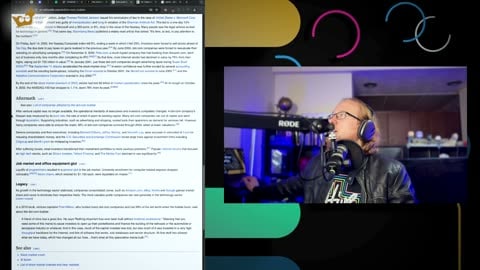 29:12Google AI: Killing My Website (example)
 32:00SEO is Dead.
 36:00Social Media Organic Growth
 38:00Value Proposition Add
 41:30Build Your Own Audience
 44:00Final Thoughts
 50:57Prayers
From the episode
Worth repeating
Word for word from the episode. Tap a time to play from that point.
“It used to be said, you build it, people will come. That's not true.”
“Your website should now be considered a storefront, a place that you send traffic to, that search engines don't send to.”
“Relying on social media. Relying on search engines. All that's going to do is make you reliant on someone else.”
Show notes
In this episode
Artificial intelligence is killing website traffic.
Organic search engine traffic is dying.
Treat your website like a storefront.
Build the content.
Find the customers.
There is no easy button.
It takes time.
Shift your priorities.
Build your audience list.
Don't trust anyone to do it for you.
Let's Connect
@jumpcutking on Instagram, X/Twitter, Facebook

Transcript
Full transcript
This transcript may contain errors. About 3,964 words.
0:00 That's an app. What's an app? I need you to make me a website. No blackberries, no websites. It is not a f***ing website. I've already made the website. You mean a website? Website check, please. Organic search engine traffic is dying. Treat your website like a storefront. Build the content. Find the customers. There is no easy button. It takes time. Shift your priorities. Don't trust anyone to do it for you.
1:06 Hmm, scary thought, isn't it? Especially in this day and age. So, we're going to talk about a bunch of things. I want to hit a little bit on the dot com boom, and how everyone has this thought that you build a website, people will come to it, people will visit it. But, that's actually a false thought. And that's because, just like if you have a storefront, if you build it, people are not going to come.
2:13 They believe that they're entitled to receive viewership from Google with search engine optimization, receive people enrolling into their email campaigns, receive people making purchases organically. This is without paying for ads. And it's a thought today that we're going to kind of break open. And I want you to consider your website less of an organic pathway for your customers to kind of funnel into your business, but more of a storefront.
3:26 Those of you who don't know, when I return, use the term funnel, I'm using that term to say, think of a funnel. So you have, you know, the open part bigger and it's got a little spot at the end and you pour stuff in and small amount of stuff comes out. In a sales process, in a marketing process, a funnel is a process of which you get people, viewers, audience, email subscribers, clicks, social media, all these things pouring into a well-planned, well-thought-out marketing campaign that includes things like a micro website, which is a specialized website, which is a specialized website, it's a single page website that's designed specifically to sell one product, one service and to do that well.
4:29 These pages become your marketing flow, you bring people to these pages and they can go through the purchase process, which is your funnel, or if it's an email marketing campaign or if it's a free download, that kind of thing, and you can direct people. This funnel process, commonly, people used to think that you just build a website, here you go, and call their website part of funneling those customers in.
5:43 So you stay on their services longer, you stay on Instagram longer, you stay on TikTok longer, you stay on Google longer. And all of these new whiz-bang AI features that Google is employing is, I mean, technically, A, it's not artificial intelligence, in the sense that we all believe from writing fiction and, you know, seeing Terminator and all that kind of stuff. It's just a neural network, which is just a very sophisticated function, for lack of a better word, definitely a series of functions.
6:47 which then outputs numbers, which is then transformed again to a response. In fact, all AI is, is a predictive model, based off of the numeric representation of your question. Now, some of the more advanced research-based AI and these new models that are coming out are really, really cool, but they're also killing organic website traffic. In fact, I wouldn't be surprised that all organic website traffic from a search engine, from chat GPTs and AIs are just going to be very limited numbers in comparison to what they were during the dot-com boom and, you know, even five years ago.
7:48 And you can't rely on keywords, and you can't rely on all the stuff that people used to do for good SEO, because Google just said, you know, chat GPTs stealing my data. They're scrolling using Google as their search index to find other websites, so now they're going to kill access to their search index, so now you can't compare, and you're stuck with Google's specific algorithm. In fact, I think Google has done more harm to website and website developers over the past 10 years than they have ever done any good.
8:52 All this extra work that you now have to do, but instead of it being helpful, it's being used to train AI. It's being used to train their new search engine experience, which is designed to give you the information you need without having to click, which is a great experience. I hated clicking on websites too, but that's what you had to do. And so now as marketers, you no longer need, don't put your eggs in that website basket thinking that it's going to be an organic funnel for you to get new customers, engagements, etc.
10:00 And so you need multiple funnels, multiple funnels, which can include multiple sources, which can include websites, social media, email campaigns, media marketing campaigns, old school sales calls, buying mail lists. And all of these things that you can do to kind of expand your sources that you're then pushing through this funnel that then may produce customers, engagements, etc. But you can't rely on SEO anymore. So let's take a quick look here.
11:07 In 1965, they started the experiments and that's when packet switching, which if you don't know, when you go to a website, you're actually downloading kilobits of information, which are wrapped around packets to ensure that the information that you're receiving is redundant because anything radio frequency is not perfect. It only looks perfect because the amount of redundancy in it. And I'm not going to give you a whole network course, but it's bits, not bytes.
12:10 Praise God for fiber. And 5G. So the first, we'll say node to node, or computer to computer, for lack of a better word, more of device to device, but node to node communication was sent on October 29th, 1969. And it was the first message from one computer to another. And it was just a, just login, a simple flag, a simple command. Very simple. Eventually, scientists began to experiment with this feature, you know, in the 1970s, and they began to build, we know as the Transmission Control Protocol, or TCP.
13:14 You should look at what a green screen looked like. We didn't have graphical interfaces in the 90s. They were relatively new. God bless Abo. So, in 1991 is when the name of the internet being a public face, being accessible to everyone, the worldwide web became something that was developed. And then, of course, you had things like National Science Foundation that helped build and expand on this. And then, eventually, you have the rise of, you know, a version of web 1.0, where you click on the link, it downloads text, it downloads images, kind of a style.
14:22 And now you have almost real-time communication, social media networks, blogs, microblogs, Instagram, TikTok, Facebook, all those kinds of applications that are, like, nearly instant in your mind. And, of course, you know, when we step into understanding why the internet has exploded, to understand a little bit about why the internet has become an essential component, and how the IA works, and now how SEO is no longer a guaranteed method or funnel source.
15:30 You had certain stock indexes that, like, quadrupled and quintupled in size. And so, basically, with the invention of radio, television, transistors, and then home computers, personal computers, like the Apple Macintosh, and the other different personal computers that were available at the time, you had the inception of the internet, back when it was dial-up. Or you'd literally plug in your phone, and you'd hear it dial a phone number, and you'd hear it kind of like a fax machine, and you'd hear it connect to the internet, and you'd do really, really slow speeds.
16:37 It is not like a USB-C, where it's just electric connections. It's full radio frequencies sent out, and you're sending them from the modem back and forth to their hubs, their networks, and things of that nature. So it's just a way to shield, and kind of like, not beam form, but kind of keep the radio signal more isolated, so that way you can transmit more information. Interesting. So, in the 2000s, you had a lot of many startups, most common one knowns, eBay, Amazon, I mean, eBay's kind of dead.
17:41 Then you had Firefox, Mozilla, and all these kinds of things. And eventually, the bubble was helped with different, you know, the Tech Communication Act, and the different ways to, the government was helping to kind of spark this technology, trying to build this virtual digital marketplace, which we now know as, you know, kind of our life. I don't know anyone that hasn't made an in-app purchase, I don't know anyone that hasn't bought something online, like, very much that phone is the most essential thing in, like, any home.
18:42 And they'd sell them back for thousands and hundreds of thousands of dollars. In fact, they still do that now. Even though, technically, ICANN, it's like an international, is an internet corporation, international corporation for sign names and numbers. That's domain names, typically. And according to their rules, domain squatting is illegal. So, if you can prove that someone is not using a domain and they're squatting it with the purpose of reselling it, you know, GoDaddy premium domains, Google premium domains, you know, pretty much any premium domain.
19:57 And you pick one, and that's the machine that you're connecting to. That's how Google.com works. All the internet traffic is routed from one machine to another machine to another machine to be able to generate that index that you experience and give you login and all those kinds of stuff that you experience from Google. But it's all through Google.com. Otherwise, you'd have to learn, like dialing a phone, you know, type in 8.8.8.8.8 or, you know, localhost is 120.0.0.1.
21:02 MAC address is a little bit different. But anyway, I'm going to connect to it. So I'll send my packets into the World Wide Web. It'll get found by that machine. The machine will respond. And thank God for HTTPS. Because before HTTPS, anyone, anyone could read those packets and information. But now they're encrypted using HTTPS. It's a certificate technology that encrypts the data you're sending to a server to only be received by that server.
22:10 So still, when you're entering credit card numbers, entering personal information, always look at the source. If the source doesn't look verifiable, if they've got spelling errors, grammatical errors, if, you know, the website is a very long domain that you don't recognize. And you're being redirected from a domain you think you know to a domain you don't know. Don't enter your personal information. Don't do it. Spamming, phishing.
23:12 Now, emails are a little bit more secure now with DKIM and SPIF records and those kinds of things. But I am really getting too technical. Really getting too technical. But back to the .com boom. This is when people started to spend billions of dollars, billions of dollars, telecom communication companies that are trying to interconnect massive amount of computers and to generate this world wide web. And then there was this scare.
24:14 And banks and whole systems were built on this concept. Well, the fear was, once you went from 12-31-99 to 01-01-00, the computer systems wouldn't know how to treat it because you went into the next century and that two-digit number is now reset to zero. So, now, my father was one of many different developers that worked and worked overnight and days and days and days to fix these bugs and to change two-digit years to four-digit years.
25:16 And they were all afraid. And so, around that time is when that dot-com boom kind of started crashing. People spent a lot of money. And then, eventually, these telecom companies just blew through a lot of cash. And, you know, this boom here, everyone's spending, everyone's investing, and then investors just got scared. And, you know, stocks that were $333 per share, which in 1999 is a whole lot of money, fell to, like, half, 140 a share.
26:19 And, you know, we kind of, outside of social media, we kind of sold a little bit in internet development. And then, you know, we had Google develop their own browser and Google search engine for a long time, cloud services. And you moved over to Web 2.0, and people have real-time access to information. And then, around a little bit before COVID, a little bit after, you start getting ChatGPT and OpenAI, which used to be non-profit.
27:25 created a huge mass databases of your website's stolen information, copyrighted information, copyrighted books, all the stuff, articles, stole it, and programmed their AI with it. They didn't pay for it. They're not paying for licensing. Their concept is, if it's a website, it's freely accessible, and it's free information. That's not the case. Websites are controlled properties, much like you would go to a library. They're controlled. You have copyright protections.
28:28 that component, outside of obfuscation, is technically usable by anyone. Now, granted, there's a whole surfer-side component that you kind of need that generates the client-side, but anyone can steal anything on the web, whether it's code, whether it's... And we're talking about client-side code, not talking about server code, so don't think someone's going to go hack your bank, although that is possible. But for the most part, anything that's on the web is freely accessible.
29:39 So here's an AI overview, right? And it tells you, hey, January 1st, 1983 is when the first internet, was considered to be invented, you can see. Now, I told you a different date, because mine comes from, well-cited Wikipedia entries, well-cited, articles, those kinds of things. But AI is not going to give you accurate information. In fact, I always recommend that you double-check AI. AI is a useful tool to prevent writer's block, to inspire you, to get you going on to the next idea.
30:41 And when I go tell someone else, I'm like, okay, here's the truth, here's the real fact, here's the real figure. AI never learns. Now, reasoning AI is getting interesting, but it's not quite the same thing. And as you can see here, this one change, one change means I don't have to scroll, I don't have to click on videos, I don't have to, even this right here, what people ask, okay, great, if I have more questions, I can expand it.
31:44 In one of my podcasts coming up, we're going to talk about search engine wars, and we're going to talk about how AI is interfering with it. But basically, when you were a web designer, you designed your website to be search engine optimized. So the search engines using, special crawling software, web crawlers, robots, ETC, that's what they would call these, pretty much advanced Python scripts, Google Go scripts, things of that nature.
32:49 Don't care about search engines at all. And here's why. Search engines are all going to be in for their business for screen time. Just like YouTube, you know, with Reels and Instagram and TikTok, they're all trying to pull you in. So you spend hours, and legit people spend like six to eight hours on average a day on TikTok, on Instagram, on YouTube Reels. And it's all designed so that they get your screen time, and they can sell advertisements to you.
33:51 No ads here. No ads here. There's no ads at all. Where are my ads? Well, that's interesting. Okay. Apparently, that Google search had no ads. But search engines sell advertising. TikTok, Instagram sell advertising. Facebook sells advertising. In fact, one of the worst places you can do advertising is Facebook and Instagram. One of the worst. YouTube is close to that, but it depends on the type of product and service you have.
34:53 And I've seen clients do it when they don't have a fine-tuned campaign. They get two sales and they spent thousands of dollars. I've seen it happen. It's tragic. You can only give people as much advice. But Google is fighting for your screen time. YouTube is fighting for your screen time, which is also owned by Google. Instagram is fighting for your screen time. Owned by Facebook, which is fighting for your screen time.
35:55 Don't do it. Waste of money. Unless you have a really fine-tuned product and a fine-tuned marketing strategy, you're wasting money. But you can build an organic kind. Think of it this way. The best marketing in the entire planet is called word-of-mouth marketing. I buy an iPhone and I tell everyone I know, don't ever buy an Android. It sucks because of X, Y, and Z. And use an iPhone.
36:56 Total War. Great pre-workout. Before that, I used something called Bucked Up. It was great. Until my friends had bad reactions to it. And it's like, nope, okay, Total War is a good happy medium. And so, now I'm telling people, you know, use Total War as a pre-workout. Same thing with, you know, jackets. I had someone who bought an AirPod Max from my recommendation. That's all free marketing based off of my experience with the product, my experience with your service, my experience with you.
37:58 Why do I care? What problem is it solving? Why did you create it? Why? It has nothing to do with what it is. Do not create a social media and here's my products. It's not going to work. You can go, this beautiful product, you're blue in your face. It's not going to work as effective as we chose this product because it, you know, it has this artistic sense or it solves this problem or it feels right or all of these things that talk about that limbic part of your brain, that emotional context part of your brain.
39:00 And that's the kind of world we live in. The Western world consumers are not logical. And I'd fair to say most consumers internationally are not logical. Logical. Some are more logical. Some care about different things than the Western culture. So there's those kinds of separations. But your website should be this beautiful storefront. As if I'm walking into your store, I should be greeted, not overly popped up to.
40:03 I don't want you. Don't care about you. Not helpful. So, there's an experience that you have to curate for customers. Just like a customer walking to your store, you have to curate that experience when a customer goes to your front page, which is going to be your number one page, okay? So, if you have a link tree on Instagram, which I don't recommend, if your Instagram is one brand, it goes to your home page.
41:05 And you can now focus more on your products and your services and answering that why. Now, that could include a blog because maybe that helps customers understand who you are or maybe that includes a podcast, you know, because it helps customers understand here's what you need to know, here's all the complexities and how I can help. Great. But the number one most important thing for you to know is your website is not going to draw organic traffic anymore.
42:12 Or, yes, here's my email. And now, same thing with your website. People start interacting with it. People start loving the content. Great. Get their email. Get their text. Start building a text strategy to build your own file. Relying on social media. Relying on search engines. All that's going to do is make you reliant on someone else. And they don't care about you. They care about their money.
43:15 But if you own the data, if you own the emails, if you own the text messages, if you start building customer files, you have a CRM, you start knowing, you know, a customer comes in, you know, they registered for your email campaign. They bought this product and you can start deciding what the life cycle of your customer is going to be. You can start building. You can use change marketing from the concept of I'm going to buy all these ads and hope I get an easy button to I'm building relationships.
44:24 But now, you know, we went from a couple hundred thousand websites to millions of websites, hundreds of top level domains. That's like dot com, dot store, dot shop, dot life, dot all these things. And you're now your ecosystem that used to be smaller is now this now vast ecosystem. Same thing with app stores, vast ecosystem. It's hard for you to get your business recognized through search unless you're paying for ads.
45:26 Use Groot, Groot, Groot, whatever X's thing is. All of these new AIs and use them primarily. The new reinvented Siri experience. I love that idea because it's supposed to be a secure experience, but it's on a device that I can control. And then I have access to information and I'm sharing app data with, but it's on the device. It's not being shared everywhere else. Because remember, your data is the number one product for these customers.
46:29 Spend less time on SEO. I'd almost say, if you have heard a bunch of SEO experts, kick them out. Kiss them goodbye. Replace them with social media. And do organic reaching out. And it's going to take a long time. You have to respond to comments. You're going to have to build relationships. You're going to have to find communities. And build this organic connection versus, well, let me just, you know, hit the easy button and spend thousands and hundreds of thousands on ads and I'll make money.
47:31 It's one-on-one conversations. It's sharing the gospel with someone and that gets them connected into the church, that gets them connected to a community of believers. If that don't work, you'd be shocked about this. I know a church that does door hangers every single week, thousands of these things. And so they're able to keep getting this new influx of new people and keep being able to reach just by putting a simple thing on someone's door hanger.
48:33 It has ads. It has sponsored posts. It shows products, but it still has value add. It's a quick way in the morning for me to see what the industry is doing or industries of my choice. Whatever it is. Okay. Boom, boom, boom, boom. Great. Now, usually it's 24 or 48 hours old, to be honest, based off whatever has been published on news sites. And sometimes they have sponsorships and things.
49:34 Build that trust. But there's no easy fix anymore. AI is constantly changing the game. You're constantly having to revisit things. Google's fighting with AI and trying to find out where it fits. And it's going to be losing money. And they're getting sued. And the DOJ is looking into them. What we thought and what we perceive that a website, a good website is, has to change. And it's not search engine optimization.
50:36 That's what I believe. And of course, I don't know everything. I say this all the time. I don't know everything. Do your own research. Hey, hit those comments. Let me know. If I said something that's a little bit out of out of the pocket, a little bit incorrect, feel free to. I don't mind getting corrected. It's part of the creative experience. We're all learning. We're all growing.
51:39 I pray this in Jesus, my name. Amen. See you next time on this wonderful podcast.